
Is artificial seaweed really being fed to Australian cattle?
We have traditionally identified the gold standard in beef as being from cattle that are grass-fed, grass-finished and 100% pasture-raised. However, many Australians would be completely unaware that local cattle are regularly being fed anything but grass and just how rare 100% grass-fed cattle is now.
In fact, it wasn’t until the 1940s that small scale supplementation of grain feeding took place in Australia in case of droughts. Then in the 1950s the first feed operations commenced and then in the 1960s the first large scale commercial feedlot operations were introduced.
The publicly raised issue of methane emissions in 2011 led to the first trials involving feeding cattle native Australian seaweed. Fast forward to 2026 and we now see large-scale commercial feedlots using a synthetic version of bromoform, an active methane-reducing compound in Asparagopsis seaweed being fed to Australian cattle. This has been publicised under its commercial name of Rumin8.

We are going to explore how we moved from grass-fed, grass-finished, pasture-raised cattle being the only source of beef in Australia to artificial seaweed. Plus, examine what the potential impacts of this may be and the additional considerations and concerns this may have for the future.
How it started with natural Seaweed being fed to Australian cattle.
In 2011, a joint project was undertaken between the CSIRO, James Cook University (JCU), and Meat & Livestock Australia (MLA) to screen native Australian seaweeds, in order to evaluate their nutritional and anti-methanogenic effects.
Then in 2013–2014, researchers led by Dr. Rob Kinley and Professor Rocky De Nys identified Asparagopsis taxiformis (a native red sea-oak species) as being the most potent and best candidate for use. The initial lab (in vitro) trials demonstrated effectiveness in reducing methane elimination.
The first peer-reviewed live animal (in vivo) trials in Australia were published between 2016–2018, initially testing Asparagopsis in sheep (2018) before moving to live feedlot cattle trials.
The company called Future Feed was launched in 2020 by the CSIRO to commercialize a natural feed additive made from seaweed (asparagopsis). However, strong doubts existed as to whether seaweed could be farmed at a large scale and there were concerns about the cost to farmers. From 2021 until the present day, Australian feedlots and commercial dairy herds have begun trialling Asparagopsis oil and dried seaweed supplements as feed additives.
According to the Australian Financial Review in an article titled Methane-busting pharma solution for cattle industry published on Oct 13, 2022, this seaweed solution has been backed by Andrew Forrest, Woolworths and GrainCorp. However, it states that there are now big question marks over whether the seaweed can be farmed at a sufficient scale, the cost burden on farmers and the palatability for cattle. The seaweed solution is estimated to involve annual up-front costs of $1000-a-head for Australian farmers.
The Development of Rumin8 – Artificial seaweed
In 2021, the Australian start-up company and product Rumin8 was founded in Western Australia to synthetically replicate bromoform (the active methane-reducing compound in Asparagopsis seaweed) in a laboratory setting rather than harvesting wild seaweed. The Perth-based company has developed the technology based on pharmaceutical production of a methane reducing feed additive, designed to cut emissions from cattle.
The technology has involved finding a way to replicate the bio-active material in asparagopsis, which is a seaweed found to reduce methane emissions.
The phase 2 funding round for Rumin8 raised over $17 million dollars to fund commercial trials in Australia, New Zealand, Brazil and the US. Plus, to build a pilot manufacturing plant.
Their pilot plant is already on track to produce 25,000 doses of Rumin8 per day based on a dose lasting a week for cattle. Their intention is to scale this up to produce millions of doses in a short time frame.
This coincides with a move for "rich countries" to move to 100 percent synthetic beef.
This is the reason why the move from feeding cattle seaweed shifted to a pharmaceutical solution offered by Rumin8. Rumin8 describes itself as an Australian climate technology company. It has patented technology that stabilizes and replicates an anti-methanogenic compound to be produced at scale and low cost for livestock.
From 2023–2024, broad animal trials began across Australia (University of New England) and at the same time across the US (UC Davis) and New Zealand, to test reductions in enteric methane.
This has expanded significantly and throughout 2025–2026, advanced, large-scale commercial feedlot and pasture trials were conducted in Australia. Additionally, major pilots took place in Brazil testing solid granule and water-trough delivery formats.
A dose of Rumin8 can be added to feed or water supply and Rumin8 is taste-testing options with small mobs of cattle. It is also working on a bolus, or a large pill option that would sit in the stomach of cattle and work for six months at a time.
According to the Australian Financial Review, in an article published in January 2023, titled Gates, Forrest back Perth’s cow methane-buster start-up, Bill Gates has thrown his support behind Rumin8 and his Breakthrough Energy Ventures (BEV) has invested in it. Andrew and Nicola Forrest’s privately owned agri-business Harvest Road has also taken a stake in Rumin8.

Ethical and integrity concerns around Rumin8
Major concerns fall into four primary categories: rumen health and animal welfare, the chemistry of the active compound (bromoform), consumer transparency and systemic greenwashing.
1. Active Compound Safety & Chemical Classification
Rumin8 uses a pharmaceutical-grade, laboratory-synthesized version of bromoform (tribromomethane) to inhibit methanogenic archaea in the rumen. Bromoform is chemically classified as a potential carcinogen in high concentrations. While Rumin8 micro-doses the compound to avoid systemic absorption, livestock ethics advocates have raised concerns about daily, long-term administration of halogenated hydrocarbons to food-producing animals.
There have been no long-term studies conducted on both animal and human safety around it. Additionally trace residues could accumulate in fat tissue, milk, or organs/offal under non-standard farm conditions.
2. Disruption of Natural Rumen Physiology
Methanogenesis is the natural mechanism cattle use to clear excess hydrogen generated during pasture fermentation. Artificially blocking the methane pathway causes hydrogen to accumulate in the rumen. While excess energy is theoretically redirected into volatile fatty acids, altering the microbial ecosystem raises questions about long-term digestive stress, sub-clinical acidosis and changes to the animal’s natural metabolic baseline.
For farmers dedicated to natural, grass-fed, or pasture-finished standards, introducing a synthetic biological inhibitor conflicts with the core philosophy of letting ruminants digest forage as nature intended.
3. Consumer Rights & Labelling Transparency
A major ethical point of concern is how these additives are communicated to the end consumer. There is already a lack of compulsory labelling. As Rumin8 is classified as a feed additive that works within the digestive tract, it does not require end-product labelling on beef packaging.
Conscientious consumers who seek out unadulterated, additive-free, or traditionally raised beef may unknowingly purchase meat from animals administered synthetic anti-methanogenics. The lack of supply-chain separation or mandatory disclosure deprives consumers of informed choice. Most consumers would want to know whether the beef they are eating has been fed seaweed or Rumin8.
4. Greenwashing as opposed to adopting a regenerative, pasture-based system
Environmental and agricultural ethicists have pointed out that methane-inhibiting additives serve as a technological patch rather than address fundamental agricultural design. Additives like Rumin8 are easiest to administer in grain feedlots or via controlled water troughs. Critics argue this incentivizes and validates intensive feedlot production under the guise of "climate-friendly beef," rather than shifting toward regenerative, pasture-based management that naturally sequesters carbon in soil.
The Role of Methane in Regenerative Cycles
Methane emissions from pasture-raised cattle are a natural part of the ecosystem and are balanced by healthy soils. As cattle graze, they stimulate plant growth, enhance soil biodiversity and contribute to carbon sequestrations. This process locks carbon into the soil, offsetting emissions and creating a sustainable cycle.

Why Don't we feed our cattle Rumin8 or seaweed?
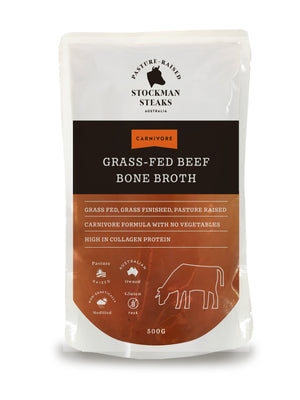
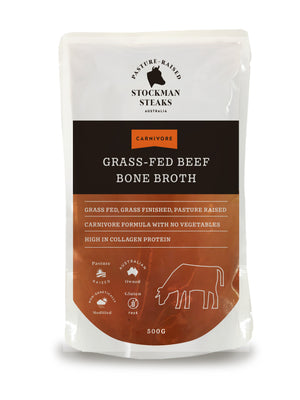
Rumin8 is designed for cattle intensive feedlot systems where methane emissions are higher due to grain-heavy diets. At Stockman Steaks, our cattle graze freely on open pastures, consuming natural grasses. This approach promotes healthier animals and doesn't rely on synthetic additions to modify natural processes.
We believe that in avoiding feed additives, we stay true to our commitment to providing beef that's free from artificial interventions just as nature intended.